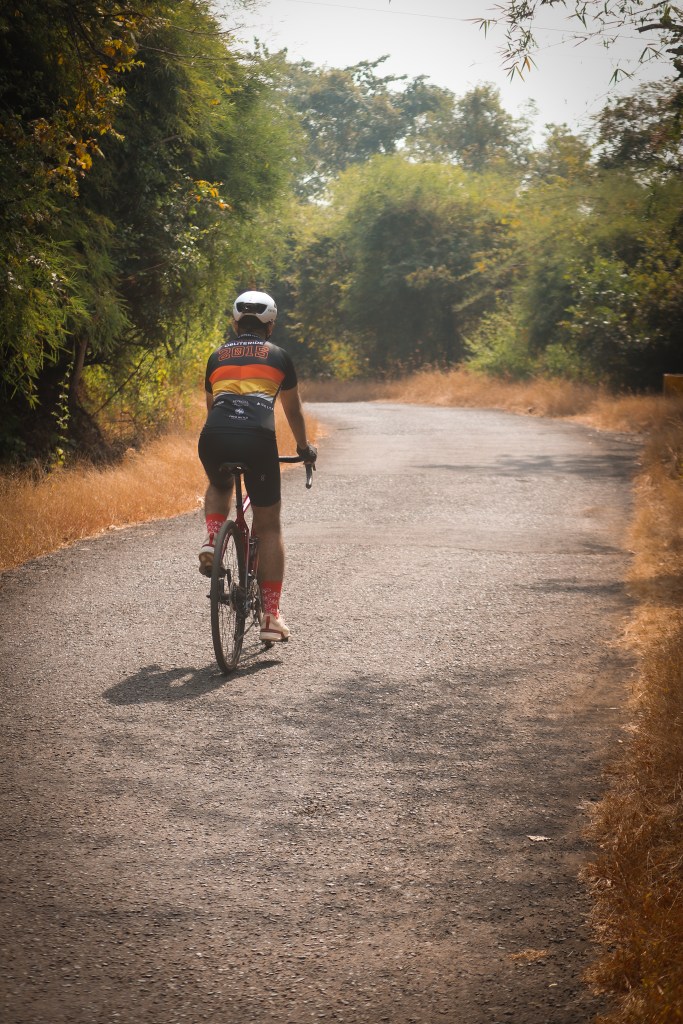
Every time I am in the Netherlands I gain new experiences and learnings. For the record, this was my third trip to the cycling paradise and I don’t think I have seen everything and there’s a lot more to discover. Unlike my previous trips, this one was a workation with mixed experiences. I tried things I had never done before. In this blog, I will take you on a virtual tour of my experiences on and off the bike. So, sit back and enjoy reading a collection of short stories.
We proudly hosted the second edition of the Netherlands-Europe-India Mobility Conference on 12th October in Amsterdam. Willem-Frederik Metzelaar, Director of the EIT Urban Mobility made an opening plenary followed by eminent speakers participating in the presentations and interactions. The event hosted several experts for a group discussion on Knowledge and Business opportunities between Europe and India which is crucial considering the active Free-Trade Agreement discussion amongst the high-level politicians and diplomats. The NL-EU-India is a crucial bridge in the making to connect people and maintain follow-ups and continue the momentum.
Willem-Frederik Metzelaar is making the opening speech.
Participants at the event got a chance to ride together in the heart of Amsterdam city passing through canals, cafes, shop fronts, and heritage buildings. It was a privilege for me to ride with an elite group of movers and shakers from the sustainable mobility space.
Participants grouping for a picture during the bike ride event.
We did a special screening of a film about the challenges of a woman commuter in Mumbai using public transport – watch here. The after-movie discussion nudged many opinions about the current state of public transport in Indian cities and areas of improvement. Promoting the bike and train combination, Training and development of urban planners, and research-based field study on Indian cycling are a few key takeaways from the conference discussion. The need for improving walkability and the Supreme Court of India’s judgement on walking being a basic right of citizens and the special bill in the Parliament were also on the table for discussion. Most importantly, finance and allocation of budgets through public and private companies is a tough task to achieve all of the above and their contribution will be vital for enhancing the quality of life, bettering air quality, reducing traffic, increasing green spaces and transforming cities in which active travel and public transport becomes central.
Dirk de Jager anchoring the event. Photo credit: Kivanq.
The event provided a unique platform for networking over dinner and conversations went beyond mobility.
Amongst the key highlights, two Indian companies – Mohit Mishra, Namma Yatri and Arhit Soni, MYBYK delivered impactful presentations before the audience showcasing efficient mobility solutions in technology, shared vehicles and bikes and e-bikes, with proven case studies in Indian market and ready to transfer services across Europe backed by committed, reliable and affordable human resources for efficient operations in a competitive cost-structure.
A joyful ride with smiling faces. Photo credit: Arjit Soni.
A huge Thank You to the organising team-Geert Kloppenberg, Dirk de Jager, Tristan van Dansik, Kivancq, Rohit Mahadev, Yuelin Wu along with the guest speakers, participants and support organisations such as EIT Urban Mobility, RVO, Dutch Cycling Embassy, TU Delft University and YES Securities for adding value to the NL-EU-India platform and nurturing its growth.
Geert Kloppenberg and I making a welcome speech. Photo credit: Kivanq.
Presenting at the International Cargo Bike Festival (ICBF):
The 14th edition of the International Cargo Bike Festival was held on 12–13 October at Jaarbeurs, Utrecht. Geert Kloppenberg and I had the opportunity to talk about Cycle Logistics in Mumbai. We briefly highlighted the recent developments in Indian cycling such as Pune Grand Tour, Fit India ‘Sundays On Cycle’ campaign, Bicycle Ambassadors program, Ironman competitions, Cycle Tourism, Bike Sharing, Cyclothon events and Brand led communities.
Mandatory photo at the ICBF 2026.
Since the event was more focused on the cycle logistics segment, we showed a documentary film on the Mumbai Dabbawalas, a 130-year-old lunch box delivery system operated on bicycles and trains. Every day, about 5000 delivery boys transport around 100000 lunch boxes on time. The entire system is error-free, runs without any technology and is managed by a Trust. The majority of the men working in this trust come from economically weaker backgrounds and have little or no formal education. The modest workforce continues to excel in their jobs and has passed on this tradition from generation to generation.
ICBF Co-founders, Tom Parr & Jos Sluijsmans.Broadcast Bike by Bart Beurman’s.
However, this traditional business model needs an urgent upgrade with modern equipment to achieve time and cost efficiency. The new-age electric cargo bikes are a perfect solution and a right fitment for this established network to survive and thrive. Because several app-based food delivery companies are successfully running operations across Indian cities and have captured a major market share in the last decade. To remain competitive, and to protect the cultural identity of Maharashtra, there is an immediate need to revamp the Dabbawala system by retiring the old rusty bicycles and bringing in the high-grade electric cargo bikes and trikes customised to their business needs. I hope the Indian government takes this up with priority.
Lucas Harms & Sonja Munnix on stage.
Besides our presentation, I listened to an interesting talk on ‘Unlocking the international economic potential of cycle logistics’ delivered by Lucas Harms and Sonja Munnix. You can read the ICBF 2026 Press Release report here and the image gallery can be viewed here.
In 2027, ICBF will complete 15 years and is scheduled to take place at Nijmegen in October. For participation and business inquiries, visit the official website cargobikesfestival.com
Jos Sluijsmans recieving a certificate of appreciation for his contribution in making the documentary film ‘All About Dutch Cycling’.With Ruth Oldenziel, a Dutch Historian and Professor at the Eindhoven University of Technology in the Netherlands & leads the International ‘Cycling Cities’ research program and book series.
Talking to Cathy-an artist:
While walking around at the ICBF exhibition, I met Cathy Tuttle. She was painting a postcard and we introduced ourselves and had a pleasant conversation. She lives in Utrecht- the number one bikeable city in the world (Copenhaginze Index 2025).
She worked for decades as a city planner, community organiser, academic and anthropologist, primarily in the American cities of Portland and Seattle. Despite an immersive professional career, her passion for art continued as a side hustle. Having moved to Utrecht after retirement, Cathy volunteers to teach adult immigrant women how to bike with De Fietsmeesters. She also spends some time repairing children’s bikes for BikeFlip, a bike leasing company.
Cathy’s son using a cargo bike with his furry friend.A usual scene from the Dutch cycling path.Broadcast Bike is a pedal-powered & electric cargo bike converted into a mobile broadcast, live streaming & recording studio in the Netherlands. Follow on Instagram @broadcastbike
I was immediately impressed by Cathy’s work and purchased a few of her postcards as souvenirs for my friends in India and some for my personal collection. Her postcards are unique because she captures the everyday street action into her camera roll and later translates those images into art pieces using water colors.
Her work is creative and I highly recommend you to buy Cathy’s postcards from her website cathytuttle.nl
Meeting with The Sharing Group founder:
I was introduced to Henri de Jong, the founder of The Sharing Group (TSG) by my friend Geert Kloppenberg. TSG is a fast-growing group with several companies operating in the Tech, Mobility and Energy space.
Henri gave us an insightful tour of his office and showed us a beautifully designed building which was formerly a bank. The most interesting part was the sample layout plan designed for Utrecht city and how TSG is working towards achieving optimum use of energy for charging electric cars and transferring excess energy back to the grid to power household appliances and illumination. The approach towards reaching circular economy concentrates on maintaining an adequate balance in lifestyle with shared electric cars, shared electric bikes, green spaces, waste management, water management, community spaces, educational centres, fitness areas, parks, gardens, places of history, library, healthcare, and spaces to meet other human necessities. All of this is a part of the plan for Utrecht.
Sharing highlights of our NL-EU-India initiative with Henri de Jong.
Beyond professional exchange, we bonded over the dinner table. What are your other interests?” I asked him, “I am fascinated with the Indian Vedas and have a keen interest in yoga, wellness and spirituality. India being a land of mental and spiritual retreat, a visit to the country will offer an enriching experience”, he replied.
As an outsider I always believed that the Dutch cities have sufficient bikes to fulfil every commuter’s needs. But that’s not true. There’s a demand-supply deviation on high-traffic routes and people want bikes to reach their destination. Two young entrepreneurs, Mike Meeusen and Teun Verschuren identified the need gap and started a shared electric bike company called Drop Mobility.
With founders of Drop Mobility.
Drop was started in 2017 and the company is backed by Henri de Jong. It provides app-based sharing vehicles for commuting, and everyday personal needs. Their official website dropmobility.com say’s that the company is running operations across 67+ North American municipalities. Their bikes are ideal for public-private spaces such as campuses, corporates, and community groups.
As I mentioned about MYBYK in the beginning of this blog, Arjit Soni, Founder and CEO was part of this trip. Arjit, Geert and I collaborated to do some pedal-talks with the Drop founders. We picked up the e-bikes from the Drop Mobility hub located near Eindhoven station and started the interview. Arjit was interviewing Mike. The conversation is filmed and will be published later on the YouTube channel.
Arjit interviewing Mike.
We ended the first part of the podcast near the ASML office. A Google search revealed that ASML is a multinational company and the leading manufacturer of Photo-lithographic systems used to mass-produce semiconductor microchip’s in the world. They have a big campus area and thousands of employees are using Drop Mobility e-bikes. The e-bikes are based on subscription and the funding is done by ASML as part of the employee benefit programme and their commitment to provide low-carbon transport vehicles.
Now, imagine an Indian company doing this for its employees. Yes, it’s possible and it’s already happening. MYBYK has set up shared bike facilities across a few business districts by collaborating with companies such as Maruti, Tata, Adani and Reliance. And MYBYK is capable of implementing it across many campuses, tourist destinations, industrial areas and metro stations in partnership with public and private companies. Reach out to Arjit Soni on his LinkedIn profile and go through his website mybyk.in
Geert is managing the film production work on the go.
If you have read the blog so far you must have understood why the conversation between the founders of Drop Mobility and MYBYK is important. It’s a knowledge sharing ride facilitated by the NL-EU-India team. For the full podcast discussion, you can subscribe to the YouTube channel of Geert Kloppenberg and keep the notifications on for the video alert.
For me as a content creator promoting cycling, it was much more than a ride. It allowed me to get deeper into the Dutch cycling culture and how far they think. And I have more fascinating stories to tell you in the next paragraph.
Exploring Leiden with Ronald Haverman, the founder of OV-fiets:
The Blue and Yellow bike is synonymous with the Dutch rail systems. You will find them everywhere. They are easily accessible for Dutch citizens through a simple tap of a card and the bike gets unlocked and ready for use. More than 20000+ OV-fiets are available for rent across 300+ Dutch railway stations.
With Ronald Haverman, the founder of OV-fiets.
The OV-fiets came into being in 2003 and was introduced on a small scale with ProRail and cyclist’s union Fiestserbond. In 2008, the Dutch National Railway ‘NS’ acquired it and gradually scaled up the fleet size. The ridership boomed post the COVID-19 pandemic and clocks nearly 6 million trips a year according to the recent stats.
Ronald Haverman is the man behind the OV-fiets success story. Arjit and I had the opportunity to speak to him in Leiden and cycle around the city centre on an OV-fiets. We shared our observations about the system and he acknowledged them for next-level growth. For Arjit as a leading bike share operator from India, it was a crucial moment to have a direct interaction with Ronald and exchange knowledge.
Arjit & Ronald sharing a candid moment.
Ronald is currently leading the projects around Donkey Republic, another bike sharing company which is rapidly growing in Europe. He has a positive opinion about shared systems for addressing mobility challenges which can be improved with IT solutions.
“Technology and Design together create possibilities beyond imagination”.
– Macbee
Research trip in Leiden.Knowledge exchange in action.
Captivating drive in Tesla’s Self-driving vehicle:
Let’s continue the discussion about technology and how it is advancing rapidly to solve urban mobility challenges. I want to introduce Vincent Everts, an entrepreneur, AI geek, trend watcher and keynote speaker.
On a chilly morning, Vincent, Geert, Arjit and I sat inside an electric Tesla self-driving vehicle. Vincent started the car and the LED screen showed instructions on how to use the Self Driving Feature (SDF). The destination was set and the vehicle was moving in a few seconds.
The 8-cameras fitted on the vehicle works with the software to make real time decisions such as stopping at traffic lights, adjusting speeds according to streets signs (30km/hr or 50km/hr), allowing pedestrians and cyclists the right of way and navigating through moving traffic. The drive was smooth except on one occasion where the vehicle made an error in judgement when it tried to overtake a car and did not anticipate the Bus coming from the opposite direction. We filmed the drive and the video will be shared after post-production is completed.
After the drive, we sat down to discuss our individual takes on the overall experience. Vincent was moderating the discussion and told that the technology is learning with every drive. The immediate thought to my mind was that the Dutch cities have well-established signages, road markings and traffic lights which make it possible for self-driving vehicles to function on a trial basis. How will it be possible in Indian cities? But Arjit had a different perspective. He said that our complex and chaotic street environment will enable faster learning for the SDF (provided the hardware remains protected from collisions, he said jokingly). Tesla’s SDF could bring harmony on the streets because the vehicles will not jump traffic lights, won’t overspeed, allow pedestrians and cyclists to pass and follow all the rules.
This brainstorming session, in which Arjit and I expressed positive feedback for SDF was very surprising for our Dutch friends. The popular belief is that cycling advocates are generally against cars, which is not true. We are afraid of the car dominance and its several negative effects on our cities. We believe that too much of an investment and infrastructure has been created for cars while other modes of transport have low priority. Should Tesla’s SDF come to India? our response is yes. We have leapfrogged in many sectors and it’s time for the automobile industry to experiment it in India.
I want to congratulate Vincent for what he is doing and his passion for technology. He is super enthusiastic about what he does and fully engrossed in his work. He thinks way ahead and adopts technology very quickly. Vincent and I met in Mumbai in August 2026 and filmed a podcast which you can watch here. We biked in the National Park on a rainy day and before flying back, he invited me for a mountain biking experience in the Netherlands which is the next story of this blog. (Take a break, grab a coffee and come back to read further).
On top of the viewing point at the National Park, Mumbai’s dense urban forest.
Mountain biking with Vincent Everts:
The transition from cycling on the flat roads in Mumbai to mountain biking on the Lage Vuursche trail in wet, cold and slippery conditions in the woods was a tough challenge. Vincent organised an MTB bike and introduced me to his friends. We installed our action cameras on the handlebars and went off immediately. The trail was unfamiliar. One of his friends was riding behind me and instructed me to use my body and the gears but I was slow to adapt. The rolling hills, continuous turns, fog on my prescription glasses, wet and loose soil, stones and aerial roots slapping my face made it difficult. He surrendered and another friend took over the duty of guiding me further. About three kilometres into the ride and I fell and was on the ground with the riders behind me braking just in time. I recovered with negligible pain but it was decided that all the riders would go ahead while Vincent would lead me and we would follow them at our own pace.
Video lesson: Failure is part of learning.
In the next segment, Vincent was in the lead position shouting every ten seconds for me to act and I did my best but the trail became harder. My heart was pumping and I was losing breath. 6 kilometres into the ride, I proposed to return to the start point. Vincent suggested taking as many water breaks as required, but we must complete the loop. I pushed myself and we were on a roll. By this time, I had some idea about the difficulty level and my confidence had recovered from negative to zero-not high. For a change, Vincent slipped and lost balance at a difficult juncture. He was strong and did not complain. Watching his brave attitude I followed him fast and we gathered a decent momentum.
The tires were rolling at a sustained pace and I was training myself to tackle the obstacles. Vincent and I were communicating on the go and my task was to confirm that I was following him and not lost. I did lose his sight once and took a wrong turn, but we were re-united after a few minutes. The action moved further and Vincent complimented me for managing some difficult sections. Eventually, the technicalities of the trail were too much to handle and I fell rolling forward and screamed ‘Vincent…help’. I was on the ground and the bike over me. Vincent rescued the situation and we sat down to evaluate the extent of the damage. I was in pain! With my moist eyes I said ‘Never trust a Dutch person when he says it’s a beginner’s trail’ and we laughed. I want to make it official that the ‘Lage Vuursche’ is a technical trail.
Video lesson: Difficult situations make you strong.
The conversation we had sitting in the forest was heart-warming. Vincent was around to lift my morale. He was motivated enough and led from the front. He didn’t allow me to surrender after my initial apprehensions. He kept inspiring me to keep going. If my father would have been alive, he would have done the same thing. This was very personal and a moment of strength for me. Vincent asked if I would come back again and I replied ‘Yes, but with protective equipment like knee and elbow guards’ and we burst out laughing again. The trust was restored. We completed the last segment of the loop and went to the Tea Point cafe.
The rest of the cycling friends joined us over breakfast. I was told by one of his friends that several riders have fallen and suffered injuries. He himself is one of the victims and wearing steel plates on his shoulder and continues to ride. And the conversation went on with many topics coming to the table for discussion.
Special Note: Vincent’s iPhone slipped out from his back pocket somewhere on the route and he realised it mid-way. We tried to trace his phone using my device but it did not work. Thankfully, a cyclist found his phone and contacted another rider with whom we were sharing a breakfast table. Vincent managed to reach out to that person and got his phone back. Our gratitude to the honest cyclist who showed moral responsibility towards the owner of the device and ensured that it was returned safely.
Walking tour with Dirk de Jager:
After a thrilling ride and adrenaline rush of mountain biking, let me take you for a calm and peaceful detour around the Amsterdam West area guided by Dirk de Jager. Dirk is a retired diplomat and dedicates his time to supporting sustainability initiatives. Some of his time is parked for the NL-EU-India project.
Dirk & Arjit reflecting on the future of Indian cities.
Dirk lives in a car-free neighbourhood called Waterspiegelplein area. It is a silent zone and one can hear the sweet sounds of birds, children playing in the garden and occasionally the loud sirens of ambulance vans.
The walking tour started with a glimpse of Dirk’s bike storage garage then we stepped out of the apartment building to visit the bike shop located below his house. After recording a brief overview of the neighbourhood, we stepped inside ‘Cafe-Restaurant Amsterdam’ for coffee. Built in the 19th century, this place served as a water treatment and supply facility. In 1996, the engine room was converted into a restaurant and the remaining rooms have been converted into offices. When this neighbourhood was being built into a sustainable, car-free, and eco-district, the municipality decided to retain the historic connection with the water plant and named it as Waterspiegelplein which means ‘Water Surface Square’.
A perfect impression of a silent neighbourhood.
Step-by-step, we explored the beautifully designed neighbourhood which has a mini farm, gardens, uniquely designed buildings, sports area, drinking water taps, and underground paid parking facility which can accommodate 200 cars.
We crossed the canal and entered the Westerpark which is a nicely maintained open public space with a lot of greenery. It has benches to sit on, flowers, trees, a water fountain, a bike path and offers a grand impression with its natural beauty.
Dirk continued to explain and we recorded some part of the tour and took a lunch break. The conversation went on as we navigated through narrow lanes and were overwhelmed by the cuteness of the streets and the bikes parked outside homes. We found three bike shops on the route and stepped inside for window shopping and a quick discussion with the staff for our understanding about the products, brands, models and prices.
Pontsteiger tower, offers premium & sustainable energy apartments with commercial spaces.
Dirk took us to the Houthaven district where he goes for swimming during summers. The view from the deck was mesmerising. We spotted the Pontsteiger building, an iconic residential tower located on the IJ river in the Houthaven district. The stories he narrated are thought-provoking and build a curiosity. This personalised tour of a fabulous neighbourhood is very inspiring and Arjit and I are fortunate to have witnessed it.
Apart from being a former diplomat and sustainability expert, you can find Dirk sailing in deep waters and at times playing the musical instrument Conga along with his local band. Dirk is a lively person, vastly experienced, knowledgeable and approachable on his LinkedIn Profile.
Conversation with Henk Swartouw:
Getting direct access to senior leadership is one of the important highlights of this trip. Henk Swartouw, President of the European Cyclists Federation agreed to do a quick interview with me outside the Amsterdam Centraal Station. We briefly spoke about trending topics such as the NL-EU-India initiative, the EuroVelo Cycling Conference, Road Safety and the booming car culture across urban cities. You can watch the video here. Thanks to Geert Kloppenberg and Dirk de Jager for arranging the meeting.
Henk, Dirk & Geert are launching the event banner in front of Amsterdam Centraal station.
After the interview, Henk, Dirk and I travelled from Amsterdam to Utrecht to participate in an event hosted by the Dutch Cycling Embassy. Henk carried his bike on the train. We had a long discussion on the cycling scenario in India and how the alliance between Europe and India can be strengthened. From the information and content point of view, he suggested that he would like to understand, read, and watch more about Indian cycling progress. I assured him to make my contribution towards it as far as possible.
Henk is active on LinkedIn and shares his original views which he calls ‘HI’ Human Intelligence. He encouraged me to participate in the next Velocity Cycling Conference scheduled to take place in Hime, Japan from 25–28 May, 2027.
Grocery run with a 80-year-old women:
This was yet another encounter with an elderly person. I connected with her via a common friend (identity is not disclosed for privacy reasons). I stepped into her house for an introduction. Thereafter, we cycled together to Albert Heijn in Haarlem for shopping. We both used pedal bikes but the differentiating factor is our age. I am in my forties and she is twice my age.
“I have been using pedal bikes all my life and never felt the need to switch to e-bikes. Pedal bikes help me get some exercise and stay active. As long as I am able to maintain my physical condition, I will hold onto my pedal bike” she explained.
Image from a grocery run.
I was taken aback when she scolded a group of tourists who were casually walking on the cycle lane and slowed down a little to go out of her sight. Next, she stopped at the pavement, removed a few bottles and tossed them into a bin. Seeing the curiosity on my face, she said they are from the last night’s party and we laughed. She had a lot of stories to share and which are captured in the video camera and will be shared with the public once the edited version is ready. Pedalling side-by-side, we entered a car-free district, parked our bikes and said good bye to each other. She went inside the grocery store and I moved ahead for another purpose.
Visit to Querine’s Atelier:
This time I was behind the camera filming with Geert. Arjit was interviewing Querine Van Poll as part of our ‘Women on bikes’ story. Querine is a pottery and voice-over artist. We met her in Haarlem and rode to her studio. She gave us a brief tour of her art pieces and the mini sound recording room.
Querine & Arjit are curating a story about ‘Women in Cycling’.
It was unusual to know that Querine is not a big fan of cycling and makes limited use of it. She likes walking instead, she told us. Arjit and Querine had a detailed conversation about her work and life and what role does bikes play in her daily routine and the story will be shared in a YouTube video. You can follow Querine on LinkedIn and visit her website loveq.nl and voice.nl
A historic wall opposite to Querine’s Atelier.
Healing with a cycling buddy on a VanRaam:
A day after landing in the Netherlands I fell sick. I had to rest for two days. Geert came to the Air BnB with a surprise. I opened the door and I saw a VanRaam adaptive four-wheel bike ready to take me on a healing journey.
Geert was in a driving seat and I barely had to make any effort other than pedalling gently. The weather was good that day and we were passing through one of the most premium residential areas with beautiful houses. I expressed my desire to buy a house in the Netherlands and Geert said you can shortlist the one you like and your dream will come true someday:)
My potential dream house in the Netherlands.
We took the VanRaam bike on the forest route which was surrounded by green landscapes on either side. No noise, clean air, a relaxed atmosphere, perfect for healing. Geert is a volunteer with the cycling buddy community which takes dependent people out on a VanRaam adaptive bike.
VanRaam is a well-known Dutch manufacturer which specialises in designing and custom building bicycles for disabled, elderly people and individuals who can no longer use a standard bike. The big advantage with VanRaam is that it allows caretakers, family members and volunteers to go out with a companion instead of being home sick.
Cycling Buddies on a VanRaam.
The solution VanRaam has built came to my rescue. Thanks to Geert for finding a remedy considering my health condition and taking me out for a meditative tour. This is not just a piece of equipment to move from A to B. It has added a new dimension to inclusive mobility. For everyone to be able to cycle, you need good equipment as much as you need infrastructure and the Netherlands has a balance of both.
This ride was filmed with an Insta360 action camera and a 10-foot long stick delivering a drone-style view. The much-awaited video will be out in 2027. To learn more about VanRaam, you can visit their website vanraam.com
Swinging over the edge in A’DAM tower:
Tenth October is incredibly the most happening day of my life in the last five years. I gathered three unique experiences packed in a single day. The first one is a daredevil swing at a height of 100 metres over the edge of the ADAM Tower. It’s a very short 90-second swing but enough to bring shivers down the body. The rooftop offers a splendid 360-degree view of Amsterdam city. There are binoculars to get a closer view of something that you are interested in seeing. I pointed the binoculars towards the Amsterdam Centraal Station and spotted pedestrians and cyclists. You can look out for many things from the tower. It has a restaurant, AR experience and a souvenir shop on the ground floor.
Shopping at the IJ-Hallen, flea market:
From the ADAM Tower, I walked for two and a half kilometres and reached IJ-Hallen, Netherlands’ biggest flea market. It’s a huge market for pre-owned stuff available at reasonable prices. The Dutch people believe in reusing stuff instead of discarding them, therefore, this is a great event which hosts hundreds of exhibitors attracting thousands of footfalls at the venue. Since the exhibitors are the general public and not brands, you need to carry cash for shopping. This is the only place I found in the Netherlands which doesn’t accept cards. With no Euro currency in my wallet and eyes targeting a few items, I accessed the nearby ATM located inside Albert Heijn and ensured those items travelled with me to India. One of them is a mouth organ which I am starting to learn and the other is a top-tube saddle bag which I plan to use whenever I buy a new bike (or someone decides to gift me).
How to reach there? Take the free NDSM ferry from back side of the Amsterdam Centraal Station and walk for about 300 metres. To avoid standing in line at the ticket window, you can buy the tickets online ijhallen.nl
A busy scene at the IJ-Hallen market.
Live Football match:
And finally the big moment arrived. I was at the Johan Cruijff ArenA to watch a live football game in Europe. The stadium was packed with enthusiastic fans, fireworks, non-stop singing and cheering throughout the game. Ajax was playing NEC and the match closed with a score of 2-3. The away team won and the home team fans were dejected. The overall experience is beyond description and one has to be there to feel it.
Fun at the Johan Cruijff stadium.
While returning home, I was at the train station and it was packed. Suddenly, I felt that I was at Dadar station in Mumbai. But crowd management was good with extra staff deployed by NS and security forces for safety. I found a spot to stand in a packed train and reached Amsterdam Sloterdijk station and got off. It was a night of heavy downpour and windy and I did not have any rain protection. After waiting for 40 minutes, the weather was clear and I walked home and reached at 12:10 am, practically the next day.
Top tip: Don’t carry a backpack or any luggage at the football stadium as you might have to rent a locker which is a few metres away depending on the entrance gate. Fan merchandise is allowed.
Walking around the colourful city of Haarlem:
I have visited several cities in the Netherlands but I find Haarlem as one of the most vibrant places to visit, it has a mix of everything but not in excess. I took a bus from Zandvoort and arrived in Haarlem to see the Wednesday market. A banner outside a shop read ‘Golden Box-Retour Paketten’ (Mystery Parcel) €2,49 per 100 grams. It reminded me of the videos I had watched on Instagram. I tried my luck and randomly picked up a box which cost €12 after unboxing it, I found a home vacuum equipment.
One person in a car Vs two on a bike.
The walked through the streets with several premium shops lined up and it was tempting to buy but the prices were out of budget. For instance, a classic black RayBan Wayfarer cost €180 in the Netherlands Vs €130 in India. I continued my window shopping spree and halted to grab a soup, a sandwich and a dessert from the local market. The city centre was hosting the annual Haarlem Vinyl Festival with a lot of activities for music lovers. The centre area was too crowded so I moved out and walked towards the Haarlem station to get an OV-fiets and continued the journey.
The homestay experience:
Arjit and I are fortunate to stay with the Dutch friends, interact with their families, understand their culture and share meals. It was totally unique to see a city through the eyes of the local people. This is something money can’t buy. It can only happen through trust and an admirable relationship. We are grateful to the families of Geert Kloppenberg, Vincent Everts and Dirk de Jager for hosting us and it is very special for us. Thank You everyone!
Gratitude photo.
What’s next? ACoffee Table Book:
Last year, I made a documentary film ‘All About Dutch Cycling‘ by collaborating with the Dutch mobility experts and the film is an official selection at the 14th Chania Film Festival in Greece and was screened at the event on 23rd October 2026. The film has crossed 11K views on YouTube and can be watched here.
My next ambition is to publish a coffee table book with visual stories. I will start working on this project from mid-November. With no prior experience of writing a book, it will be a good learning experience. At the same time, this project will need significant time and financial investment for editorial and design, publishing, distribution and marketing. I invite you to support my work through donations using the below QR code.